British Team, Bulgarian Pitch: Where Do You Pay Tax If You Work From Abroad for a UK Company?

British Team, Bulgarian Pitch: Where Do You Pay Tax If You Work From Abroad for a UK Company?
A client recently asked me: “If I live in Bulgaria and work full-time for a UK company, where do I pay my tax and social security?”
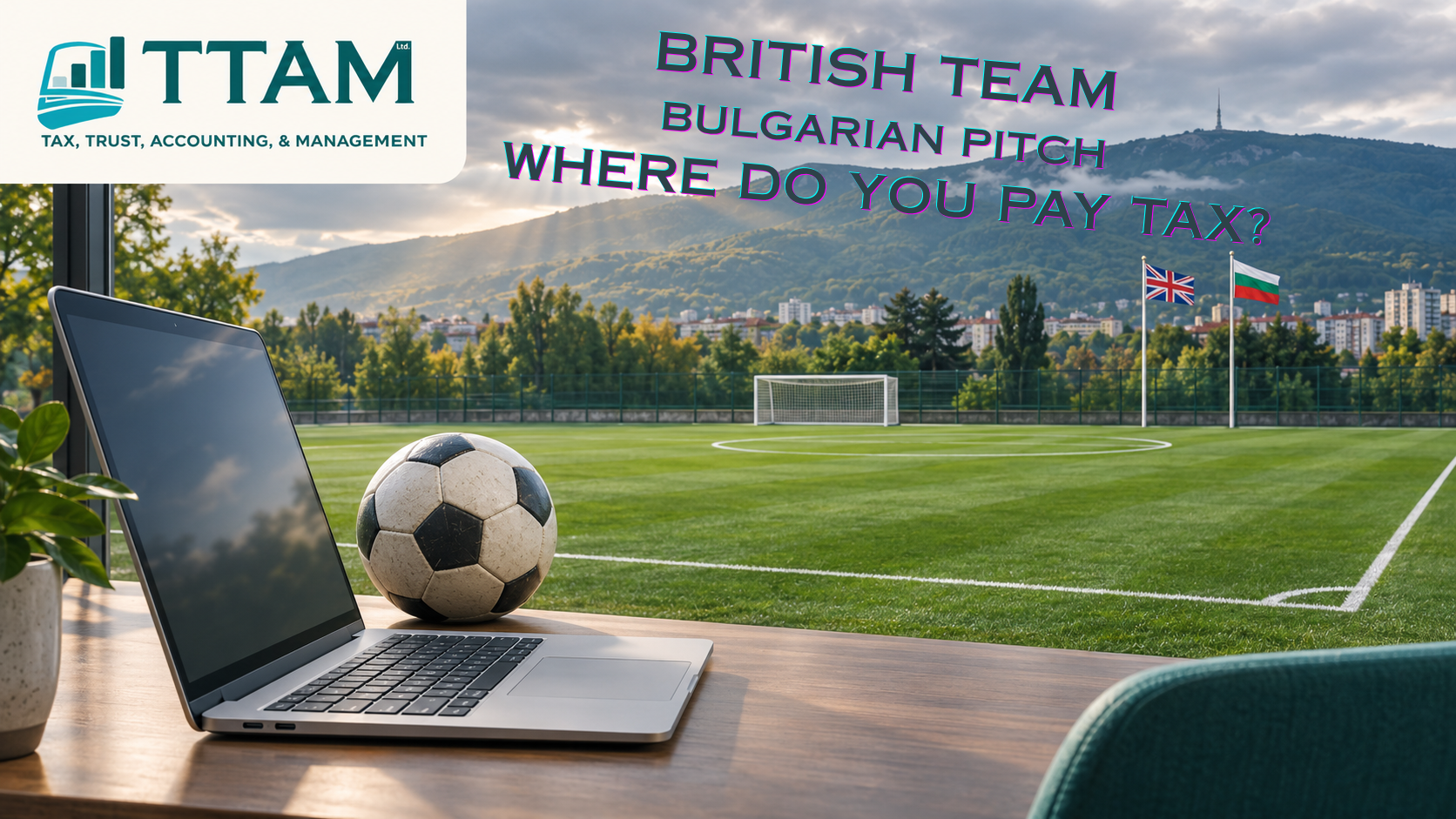
In football, the team can be English while the match is played in Sofia. Remote work has the same split. The employer may be UK tax resident and pay you in pounds, but the work is done every day from another country. Where you physically work is one of the first things we need to pin down.
Meanwhile, England is still wondering why such a talented squad hasn’t won the World Cup since 1966, and Bulgaria is wondering where to find the players in the first place. Tax is one match where both sides should read the rulebook before kick-off.
We’ve looked before at what happens when work takes you across dozens of countries, in our post on Santa Claus and the World’s Most Complicated Tax Return. This time the case starts with one laptop, one contract and two tax systems.
It’s not just Bulgaria
Bulgaria is our example today, but the same questions come up for people working from Romania, Poland, Hungary, Czechia, Portugal, Spain, Greece and many other countries. More and more people are looking at this option: a UK salary, a laptop, and a life somewhere with better weather and cheaper lunches. The laptop doesn’t mind where it sits. Tax authorities do.
The questions are the same everywhere: where you are tax resident, where the work is physically done, whether you are an employee or self-employed, and where social security is paid. The answers can differ, because each country has its own tax rules and its own double tax treaty with the UK. So check your own country and your own facts before you settle in.
If you are an employee
Say you are tax resident in Bulgaria, work entirely from there, and have an employment contract with a UK company. For ordinary private-sector employment, pay for work done in Bulgaria is generally taxed in Bulgaria. Days spent working in the UK can change that analysis. If the UK employer is operating PAYE, it is worth checking whether the deductions match your situation and whether a correction is needed. The UK–Bulgaria double tax treaty sets out how taxing rights are shared.
The “183 days” rule often comes up. It matters in two places: in deciding tax residence, and in the treaty’s separate short-stay rule for work in the other country. The second rule also looks at where the employer is resident and whether the pay is borne by the employer’s permanent establishment in the country where the work is done. For residence, your “centre of vital interests” (home, family, economic ties) can also matter.
Source: UK–Bulgaria double taxation convention (2015), Articles 4, 14 and 21
Where do social security contributions go?
If you work permanently from Bulgaria only, the Bulgarian system normally applies. If a UK employer temporarily sends you abroad, UK contributions may continue where the conditions are met and HMRC issues an A1 certificate of coverage. The practical questions for the employer are whether it must register in Bulgaria, who calculates and pays contributions, and how tax withholding and reporting are handled.
Source: HMRC: National Insurance for workers from the UK working in the EEA or Switzerland
If you are self-employed and invoice the UK company
If you are genuinely self-employed, the UK company is your client. If you live and work from Bulgaria, you will usually need to deal with income tax and social security there. The exact registrations and returns depend on how you operate, for example as a freelancer or as a sole trader. VAT is a separate question.
Calling yourself a “sole trader” in the contract, and sending a monthly invoice, is only part of the picture. If the company sets your hours, directs your day-to-day work and expects you to perform the tasks personally, it is worth checking whether the relationship is in substance employment.
When does the UK company have a tax question in Bulgaria?
Picture two people working from Sofia for the same UK company. One prepares internal reports. The other regularly signs contracts on the company’s behalf. Both work from Bulgaria, but their roles raise very different questions for the business.
If someone habitually concludes contracts for the company, or the company has a fixed place of business in Bulgaria, a permanent establishment may arise. That could bring part of the company’s profits into Bulgarian tax. The answer depends on the person’s functions and authority and on how the company uses the workplace.
Source: UK–Bulgaria double taxation convention (2015), Articles 5 and 7
What to clarify before you sign
Start with three questions:
- Where will you work from, and will you have working days in the UK?
- What will the day-to-day relationship with the company look like?
- Who is responsible for tax, social contributions and filings?
If you will represent the company to clients or sign contracts in its name, settle those powers too.
This article is general information, not personal advice. Your position depends on your facts.
Follow us for more practical tax tips
If you work from Bulgaria for a UK company, or you are thinking of moving to another country, TTAM Ltd can help you understand where to declare your income, where tax and social security are due, and what steps to take. If you have a question about your own situation, contact us at ttam.smarttax@gmail.com or on +44 (0) 117 463 1777.
TTAM Ltd | Tax, Trust, Accounting, & Management
📍 7 Marlwood Drive, Brentry, Bristol, BS10 6SH
📧 ttam.smarttax@gmail.com | 🌐 www.ttam.ltd
📞 +44 (0) 117 463 1777 | +44 (0) 7887 04 30 20